
Cremation services in Ghana: Process and providers
September 24th 2024
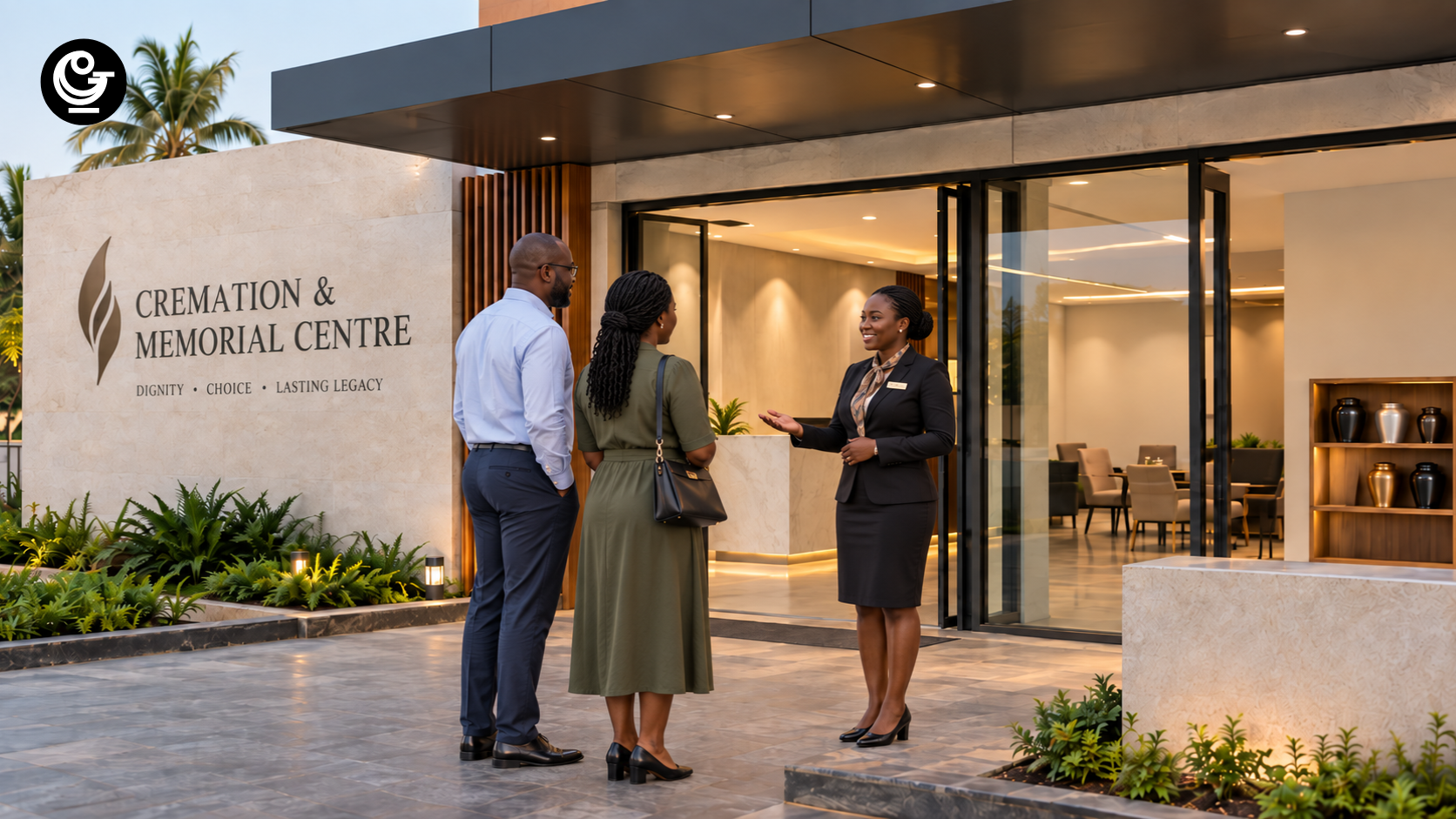
Cremation is an alternative to burial that some families in Ghana consider for personal, religious, practical or family reasons.
It remains less common than traditional burial, and families considering it may have questions about where cremation is available, what documents are required and what happens to the ashes afterwards.
Cremation in Ghana is legally recognised and regulated. However, current licensed facilities are limited, so families should confirm availability before making final funeral arrangements.
This guide explains the current process, the legal requirements and the questions to ask a cremation provider.
Is cremation legal in Ghana?
Yes.
Ghana's Registration of Births and Deaths Act, 2020 (Act 1027) expressly recognises cremation as a form of disposition of a deceased person's body. The Act also defines a burial permit as authorisation for burial, cremation or another lawful form of disposition.
Crematoriums themselves are regulated separately.
The Mortuaries and Funeral Facilities Agency, or MoFFA, licenses and regulates facilities involved in the storage, transportation and disposal of human remains. Crematoria are specifically included among the types of facilities that require licensing.
Families should therefore use a properly licensed crematorium rather than assume that any funeral home can provide cremation.
Where is cremation currently available in Ghana?
As of September 2026, MoFFA's published list of licensed facilities identifies Lashibi Funeral Home and Crematorium Limited in the Greater Accra Region as licensed for crematorium services.
Its current long-term licence covers:
funeral home;
hearse;
mortuary;
cemetery;
crematorium;
columbarium.
The published licence period runs from 1 September 2025 to 31 August 2028.
Lashibi Funeral Homes also states that it operates Ghana's only gas cremator and provides an area within its cemetery for keeping cremated remains.
Because facility availability can change, families should check MoFFA's current licensed-facilities list and contact the provider before making arrangements.
What is required before cremation?
Cremation is not simply arranged by taking the deceased to a crematorium.
Ghana's Registration of Births and Deaths Regulations, 2021 (L.I. 2436) sets out specific requirements.
The crematorium may carry out the cremation only with the permission and under the supervision of the health officer for the district where the cremation will take place.
The district health officer must be satisfied with one of the following:
Two independent medical certificates stating the cause of death, in the prescribed form; or
One post-mortem examination report.
In addition, the District Registrar for the district where the cremation will take place must amend the burial permit to show that the body is to be cremated.
After the cremation, the person who supervised it must endorse the permit and return it to the District Registrar.
A simple cremation process in Ghana
Families can think of the process in this sequence:
Death → death registration and medical documentation → cremation provider → district health approval → amended burial permit → cremation → ashes returned or placed according to family arrangements
The exact sequence may vary where a coroner, post-mortem examination or international repatriation is involved.
For that reason, families should begin by discussing the circumstances of the death with the cremation provider and the appropriate authorities.
Documents families should confirm
Before setting a cremation date, ask the provider which documents apply to the particular case.
These may include:
death certificate;
medical cause-of-death documentation;
two independent medical certificates where required for cremation;
post-mortem report where applicable;
burial permit amended for cremation;
identification information;
other documentation requested by the District Registrar or health officer.
The important point is not to rely on a generic checklist copied from another country.
Ghana has its own statutory cremation procedure.
Families dealing with a death abroad should also confirm repatriation documentation separately before arranging cremation in Ghana.
What does the cremation provider do?
A cremation facility may assist the family with several practical steps.
Lashibi currently states that it can assist families with documentation and permits connected with cremation and also supplies cremation urns.
When contacting a provider, ask exactly what is included.
For example:
Does the provider help obtain or coordinate the required approvals?
Is transportation of the deceased included?
Is body preparation included?
Is the cremation itself the only service being quoted?
Is an urn included?
Can the family hold a service before the cremation?
Can relatives be present for part of the process?
When will the ashes be available?
What options are available for storing the ashes?
What happens if additional medical or legal documentation is required?
Ask for the answers and quotation in writing.
What happens to the ashes?
Families have different preferences for cremated remains.
They may wish to:
keep the ashes in an urn;
place them in a columbarium;
hold a memorial service;
arrange another lawful form of remembrance.
A columbarium is a structure containing compartments designed for cremated human remains. Ghana's Health Institutions and Facilities Act specifically recognises both crematoria and columbaria as funeral facilities subject to regulation.
Lashibi currently states that it has an area within its cemetery for keeping ashes after cremation, and MoFFA's current list shows the facility licensed for columbarium services.
Families should discuss their preferred arrangement with the provider before the cremation takes place.

Religious and cultural considerations
The decision to cremate can involve more than practical considerations.
Some families may have strong views based on:
religion;
family tradition;
ethnic or community customs;
wishes expressed by the deceased;
expectations of the extended family.
There is no single Ghanaian position on cremation.
Families should therefore avoid assuming that cremation will automatically be accepted or rejected by relatives, a church or a traditional family structure.
Where religious rites are important, speak with the relevant priest, pastor, imam or religious leader before finalising arrangements.
Early family discussion can also prevent disagreement later.
Cremation and funeral services can still work together
Choosing cremation does not mean that a family cannot hold a funeral or memorial service.
A service may take place before or after cremation depending on the family's wishes and the arrangements available.
Lashibi, for example, operates an interdenominational chapel as part of its wider funeral facilities.
Families may therefore still organise:
prayers;
hymns;
tributes;
a memorial service;
family gatherings;
thanksgiving;
remembrance activities.
The method of disposition and the way a family commemorates a life are separate decisions.
Questions to ask before choosing cremation
Before committing, ask:
Is the crematorium currently licensed by MoFFA?
Is it available on the required date?
What medical documentation is required?
Who obtains the district health officer's permission?
Who arranges the amended burial permit?
What services are included in the quotation?
Is an urn included?
Can a funeral or memorial service be held at the facility?
When will the ashes be released to the family?
Are columbarium or other ash-storage options available?
What additional costs could arise?
What happens if the required approvals are delayed?
These questions allow the family to compare the actual service rather than focus only on price.
Finding funeral providers through Ghana Funeral Services
Ghana Funeral Services helps families find and contact funeral-related businesses in Ghana.
Because licensed crematorium availability is limited, families looking specifically for cremation should first confirm current licensed facilities with MoFFA.
They can then use the Ghana Funeral Services Funeral Home and Funeral Directors categories to find related providers for transportation, funeral planning and other services. Ghana Funeral Services is designed to support provider discovery rather than declare one business the “best”.
Cremation is an option, but preparation matters
Cremation is a lawful funeral option in Ghana, but it involves specific health, registration and facility requirements.
Families considering it should begin by confirming three things:
Is the facility licensed?
Do we have the required medical and registration documents?
Does the family understand what will happen before, during and after the cremation?
Once those questions are answered, the family can make a more informed decision about whether cremation fits their wishes, beliefs and funeral plans.
Written by: David Owusu Asante
Related Articles
Funeral flowers and wreaths in Ghana: Services and ordering
Browse the post to know more and explore detailed insights on this topic.
Read MoreThe role of professional mourners in Ghana
Browse the post to know more and explore detailed insights on this topic.
Read MoreVehicle rentals for funerals in Ghana: Ensuring a dignified farewell
Browse the post to know more and explore detailed insights on this topic.
Read More